
Yes, I know it's been a while. A long while, in fact. But anyway. A couple of weeks ago, here in Belfast, we knew that the first stretchng fingers of winter were exploring the landscape because the air was cold, there was frost in the morning, and the air was clean after a warm wet summer.
For the past couple of days, it hasn't been like that at all. To redress the balance slightly, at least in my own head, here's a womderful variation on the idea of presence, absence, and substance... a billboard that advertises clean air.
Thursday, November 04, 2010

Thursday, July 15, 2010
A ship, underneath a time in a city
The news from New York City that an 18th-century ship has been found underneath the (fortunately rainy) World Trade Center site reminds me of this fascinating look at the fact that in San Francisco, lots of scuttled wooden ships were actually part of the built city and are still there underneath it.
(It's worth reading around that last linked post, as there are plenty more riches to discover.)
(Edit - another blog about this here. And Gothamist here.)
(It's worth reading around that last linked post, as there are plenty more riches to discover.)
(Edit - another blog about this here. And Gothamist here.)
Tuesday, May 11, 2010
Channel 4 and New Labour
The Labour Party in the United Kingdom came to power in 1997 in an election in which I voted for it directly, in Scotland. I was still a teenager.
Its period in power saw pop stars courted in Number 10, iconic additions to the cultural and architectural landscape of the country, including the rebuilding of a power station as Tate Modern and the partial demolition of institutionalised homophobia. Tony Blair bonded with George Bush in the weeks and years after 9/11, thousands of new crimes were added to the statute-book, the concept of the nanny state was talked about more and more, and civil liberties were eroded so much that a photographer cannot walk today down any street in London without fearing the oppressively chilling effect of Labour's Terrorism Act. My passport contains a microchip and antenna which invisibly identifies me wherever I carry it.
And yet. The one time that springs to mind for me, now that the Party's time in Government is over, is a dark evening in March 2003. It was raining, I was out of work, and the United States, assisted so essentially by the United Kingdom with Tony Blair at the helm, was just about to start bombing runs over Iraq because of the oil.
Shock and Awe, we were told to call it, even though it was neither. And I sat there, in this chair, all those years ago, feeling sad and sick and powerless. I had a beer, and lots of cigarettes, and thought of war. Back then, I couldn't have realised that the oil takes on a quite different sheen today. America's own Gulf Coast hates the stuff.
The Channel Four News aired earlier tonight as Gordon Brown stepped down as Prime Minister and Labour leader and removed himself and his Party from Government. An HD camera, fixed to a helicopter, provided dispassionately sharp aerial pictures.
And as the silent motorcade brought Prime Minister Brown into the courtyard of Buckingham Palace to tender his resignation to Her Majesty, the well-loved newsman Jon Snow provided a thoughtful commentary:
"Well, if what they say is true and the Queen really does watch Coronation Street, she'll be postponing it tonight!"
The cars stop. A camera in the courtyard records the scene. A shiny black door opens. There is, for a long moment, silence.
"...They say she does."
Tuesday, March 09, 2010
Ideal world
Someone just asked me what I'd do for entertainment in an ideal world.
I typed the following:
Morning, up earlyish but not so early that I'm bleary. Nice cool morning, hot coffee and croissants outside in green, delicate garden. Medium-long, hot bath. With either Radio 3 or 4 on in the background. Dress. Trip, by train, out of cool, modern but tiny Norwegian / Icelandic / Swiss alpine village where I live, with good book, magically arriving in large but originally medieval town for lunch. Wander around the cathedral after lunch, impromptu organ concert. Preferably Bach, Glass and Messiaen. Another train trip by magic train to London, nice jaunt in the tube to Tate Modern, to see some Cy Twombly. Beer and olives in the cafe afterwards. Magically end up in the Lake District for an early evening walk around a lake surrounded by mountains before dinner in an excellent little restaurant in Ambleside. Old-fashioned but magic train home, via a bar in, why not, Northern Canada, to catch some snow, fir trees and the Northern Lights, before getting back to Norway / Iceland / Switzerland, a LONG hot bath, whisky, continental sausage and cheese, and then bed.
I typed the following:
Morning, up earlyish but not so early that I'm bleary. Nice cool morning, hot coffee and croissants outside in green, delicate garden. Medium-long, hot bath. With either Radio 3 or 4 on in the background. Dress. Trip, by train, out of cool, modern but tiny Norwegian / Icelandic / Swiss alpine village where I live, with good book, magically arriving in large but originally medieval town for lunch. Wander around the cathedral after lunch, impromptu organ concert. Preferably Bach, Glass and Messiaen. Another train trip by magic train to London, nice jaunt in the tube to Tate Modern, to see some Cy Twombly. Beer and olives in the cafe afterwards. Magically end up in the Lake District for an early evening walk around a lake surrounded by mountains before dinner in an excellent little restaurant in Ambleside. Old-fashioned but magic train home, via a bar in, why not, Northern Canada, to catch some snow, fir trees and the Northern Lights, before getting back to Norway / Iceland / Switzerland, a LONG hot bath, whisky, continental sausage and cheese, and then bed.
Wednesday, February 03, 2010
Demand
A few minutes ago, I said to a friend:
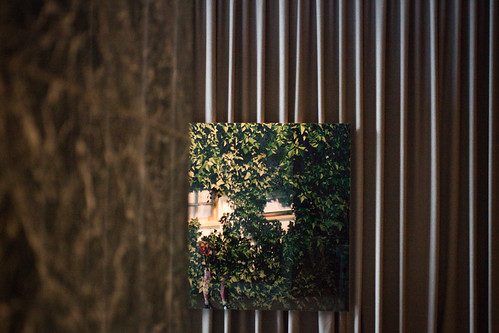
I'm currently cobbling together a blog post solely for my own benefit about an organ in an open-air tower in a castle in germany, inspired by the photos of a guy who takes photos of models of photos of quietly significant things in recent German history.
Monday, February 01, 2010
Pavey Ark and Old Peculier
Now, I know this is just a video, but I am putting it here because Jonathan doesn't approve of me using Twitter, and I meant to put it here at some point anyway. It's actually not really a video at all, but a series of stills taken with a digital camera on a rotating mount. I think they timed the rotation precisely so that they'd catch the cliffs above the lake being illuminated by the sunrise. More info here. Click through to Vimeo and watch the video HD and fullscreen, though.
Pavey Ark is a fell (local dialect for mountain) in the Lake District, NW England. It stands above the valley of Great Langdale, which is the most beautiful valley I have seen in the UK, and is climbed most via the Stickle Ghyll ascent from the Old Dungeon Ghyll Hotel down in the valley bottom (not so much a hotel although you can stay there, but more a wonderful, atmospheric no-shit climbers' bar with higgledy-piggledy wooden snugs and a big old black range with a fire when it's cold, and Old Peculier on tap).
The point of Pavey Ark, as with most fells in the valley, is that it is both beautiful to look at and hard to get up. You can't stroll up the steep path by the stream which flows from Stickle Tarn (the lake in the video). You can't stroll from the tarn to the summit.
And that cliff above the tarn - you can, if you wish, take your life in your hands and climb it without ropes, and I have done so, although at the temporary expense of my nerves. And the skin on my fingertips. Should you try the same thing, don't try it on a wet day, and if the day is wet, watch your step on the way down from the tarn. You may break an ankle if you're not careful.
But the Old Peculier at the end of it all is so good. Worth rushing for.
24 hours, Pavey Ark from Michael Moloney Studio on Vimeo.
Pavey Ark is a fell (local dialect for mountain) in the Lake District, NW England. It stands above the valley of Great Langdale, which is the most beautiful valley I have seen in the UK, and is climbed most via the Stickle Ghyll ascent from the Old Dungeon Ghyll Hotel down in the valley bottom (not so much a hotel although you can stay there, but more a wonderful, atmospheric no-shit climbers' bar with higgledy-piggledy wooden snugs and a big old black range with a fire when it's cold, and Old Peculier on tap).
The point of Pavey Ark, as with most fells in the valley, is that it is both beautiful to look at and hard to get up. You can't stroll up the steep path by the stream which flows from Stickle Tarn (the lake in the video). You can't stroll from the tarn to the summit.
And that cliff above the tarn - you can, if you wish, take your life in your hands and climb it without ropes, and I have done so, although at the temporary expense of my nerves. And the skin on my fingertips. Should you try the same thing, don't try it on a wet day, and if the day is wet, watch your step on the way down from the tarn. You may break an ankle if you're not careful.
But the Old Peculier at the end of it all is so good. Worth rushing for.
Subscribe to:
Posts (Atom)

